
Winter shelters for grass snakes built at Park Farm
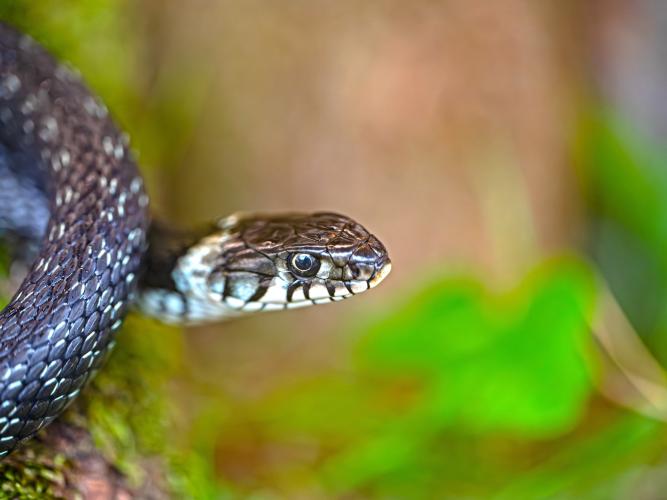
The Oxford Green Estate (OGE) team have created four hibernacula at Park Farm - structures designed to protect reptiles from the cold in winter.
This follows a survey showing the site is important for grass snakes, and that these "tents for winter quarters" were a key factor in maintaining their populations.
The hibernacula give the snakes a safe, moist, and relatively warm place to spend the winter. Ours are made of logs, wood chip and hay.
Grass snakes hunt prey ranging from amphibians to small mammals. They hibernate from November until April. They do not bite and are harmless to humans. Their numbers are thought to be declining in England. They lay their eggs in June and July, with the young emerging in late summer.
The hibernacula are just part of a series of biodiversity projects being funded at Park Farm, one of the sites that are managed though OGE, with the goals of supporting research, conservation and public engagement. Previous initiatives include pond restoration and re-digging ditches, both of which will provide ideal grass snake feeding areas.
All the practical work is being undertaken or supervised by the OGE team, with funding from the Environmental Sustainability team.
Contact us
- oge@admin.ox.ac.uk
- 01865 614460