
New book explores 10,000 years of change in Wytham Woods
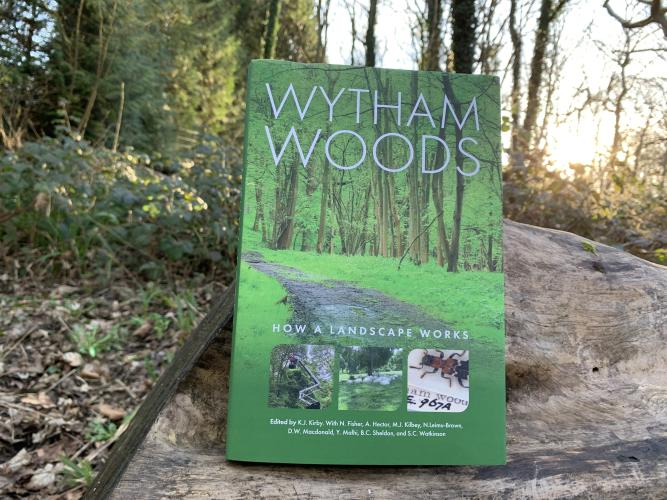
A new book examining one of Britain's most intensively studied natural landscapes has been published, bringing together decades of ecological research and historical insight from scientists at the University of Oxford.
Wytham Woods: How a Landscape Works, edited by Keith J. Kirby, ecologist and visiting researcher at the University's Department of Biology, offers a comprehensive account of the 1,000-hectare Wytham Woods estate, charting its development over the past 10,000 years and exploring how human activity, wildlife, and environmental change have shaped the landscape.
The woodland and surrounding farmland became part of the University in 1943 and has since served as a living laboratory for ecological research. Early studies led by pioneering ecologist Charles Elton in the 1950s helped establish key principles of modern ecology. Today, scientists continue this work using advanced technologies such as DNA analysis, drone mapping and satellite remote sensing.
A detailed study of a renowned woodland
The book highlights both the scientific and human history of the estate. It explores the "social landscape" of Wytham, from medieval farmers and the Earls of Abingdon who once owned the estate, to modern citizen scientists and artists inspired by the woodland.
Alongside historical analysis, the volume presents new research on topics ranging from carbon storage and woodland dynamics to grassland restoration and wildlife populations. Long-running studies of badgers and great tits - some of the longest continuous wildlife monitoring projects in the world - are also outlined in the book.
Kirby collaborated with a team of highly experienced Oxford researchers studying the woods, including ecologists, conservation scientists and historians. Together they analyse how the estate fits into a global network of research sites contributing to the understanding of biodiversity, ecosystem processes and climate change.
As environmental pressures grow, the book also looks ahead to the future of the landscape, considering how climate change, tree diseases and evolving conservation policies could reshape the woods in years to come.
By combining ecological science, archaeology, and social history, the authors hope the lessons from Wytham Woods will inform conservation and land management not only in Britain but around the world.
Launch event
To celebrate the release of the new book, staff are invited to an afternoon of talks at the Museum of Natural History on Saturday 14 March from 2pm-5pm in the main lecture theatre. You can register your place now, and purchase your own copy of the book at Oxford University Press.
You can also find out more about Keith J. Kirby and his work over at his blog, The Old Man of Wytham, and via this recent podcast recorded for the Leverhulme Centre for Nature Recovery, Wytham Woods: Tales from a long-studied woodland.
Contact us
- oge@admin.ox.ac.uk
- 01865 614460